.png)
How Environmentally Friendly Are Modular Buildings?
Modular buildings are generally considered an environmentally friendly construction method. They generate less waste, use fewer materials, and reduce disruption on-site, while conforming to modern building standards.
According to the UK government, the construction industry generates 62% of the UK's total waste, and the cost of building materials is projected to rise year-on-year. This represents a high environmental and monetary cost to any organisation.
By embracing modular buildings and their inherent advantages, organisations can spend their money wisely without compromising on quality.
In this blog, we are going to be discussing what makes modular buildings more sustainable than traditional builds, the energy efficiency of modular buildings, and their reusability.
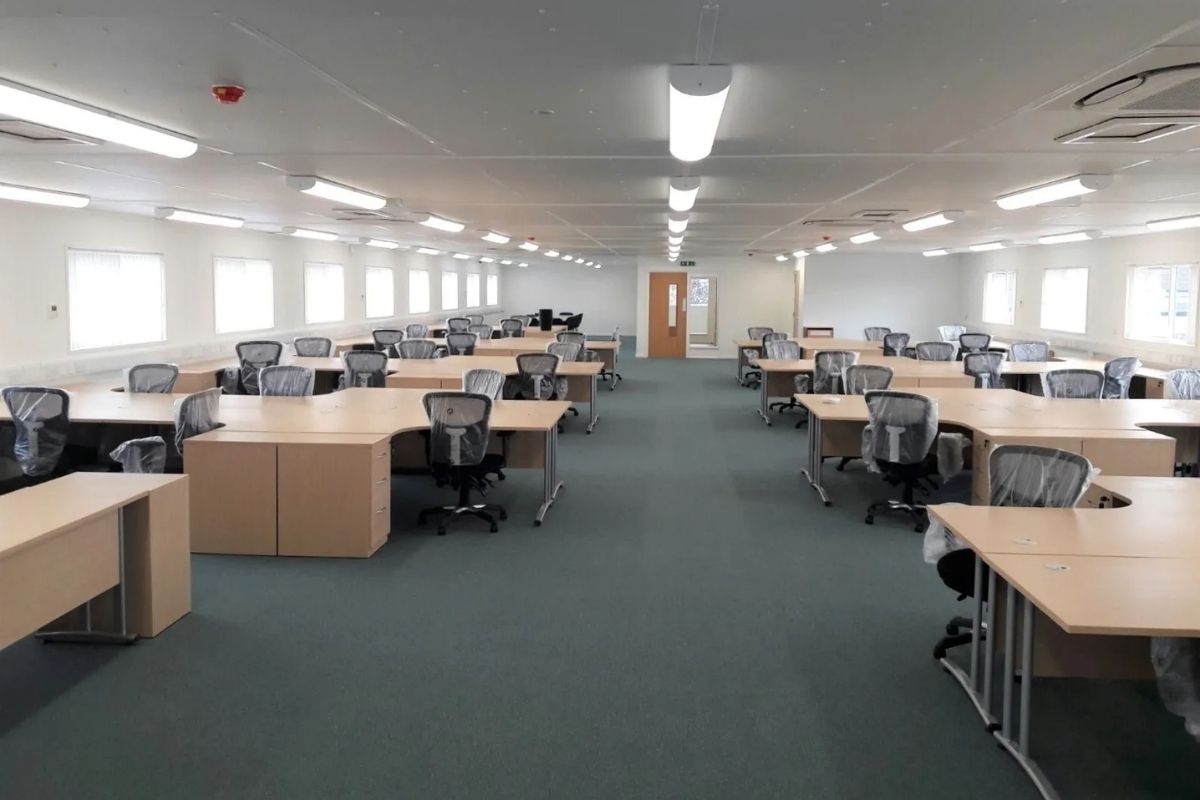
How Do Modular Buildings Reduce Their Construction Waste
The manufacturing process for modular buildings creates far less waste than traditional construction. Modular buildings are manufactured in sections; as a result, materials can be used more accurately and efficiently.
This manufacturing style not only reduces waste but also makes construction more affordable. With more efficient use of materials, less will need to be purchased during the manufacturing process.
Any excess materials can often be reused on other projects or recycled within factory operations. Research suggests that the use of off-site construction, among other elements, could lead to a 90% reduction in construction waste.
Do Modular Buildings Have a Lower Carbon Footprint?
In many cases, modular construction can deliver a significantly lower carbon footprint than traditional building methods.
There are several measurable factors:
- Fewer vehicle trips to and from the site
- Shorter building programmes, lowering overall energy usage
- Efficient material usage, reducing embodied carbon
- Reduced reliance on heavy machinery
With a large portion of the build taking place offsite, there is less disruption to the local area, including elements like noise, dust, and traffic.
The University of Cambridge found that off-site construction methods can reduce carbon emissions by up to 45% compared to traditional projects.
For businesses, this is more than a statistical benefit. Lower construction emissions can support sustainability targets, improve environmental reporting, and show a commitment to reducing environmental impact, without increasing project timelines or complexity.
Offsite construction is particularly well-suited for businesses needing offices in a short time frame, offering a low-emission solution with fast delivery times. To find the right office for your company, you can browse our range.
Scope 3 Emissions:
Organisations are becoming increasingly aware of their carbon footprint and how this is being perceived by stakeholders and investors.
Building construction falls under scope 3 of an organisation's emissions, the indirect emissions that are not produced by an organisation directly, but are a result of their purchases or investments.
Traditional construction involves deliveries of materials, personnel, and machinery. Multi-day construction may lead to delays, further compounding waste, all of which have a direct impact on the organisation's sustainability targets.
Modular construction helps address these challenges by streamlining the build process. With fewer deliveries, shorter timelines, and more efficient material usage, it can reduce the indirect emissions commonly found in construction projects.
Are Modular Buildings Energy Efficient?
Modular buildings are designed to be eco-friendly, with energy efficiency in mind from the beginning. Modular buildings are held to the same standards of energy efficiency as traditional construction.
Due to units being manufactured in controlled factory environments, construction can be more consistent. Insulation and sealing can be improved, leading to more energy-efficient buildings.
Many modular buildings meet or exceed the UK building regulations for energy performance, like the Energy Performance Certificate (EPC).
When buying a modular building, you won't have to sacrifice energy efficiency for faster turnaround and affordability.
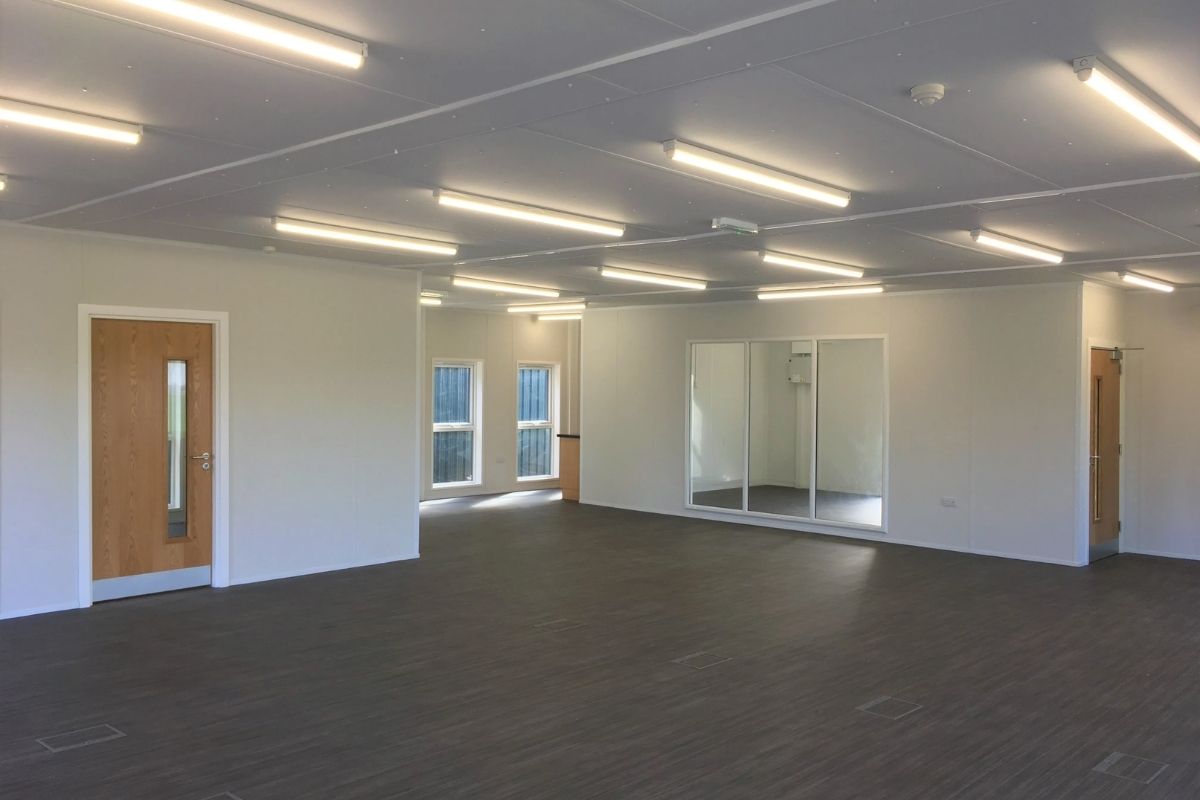
Can Modular Buildings Be Reused or Adapted?
Another eco-friendly element to consider is the flexibility. Modular structures can often be relocated, extended, or reconfigured as your organisation's needs change.
This results in:
- Fewer new materials for future projects
- Reduced demolition waste
- Long-term value for your investment
This approach aligns with circular economy principles, which focus on reducing waste by keeping materials and assets in use for longer, or having waste materials repurposed.
These buildings can be reused, relocated, or adapted instead of being demolished. For businesses planning growth, this flexibility is key to maintaining sustainability over time.
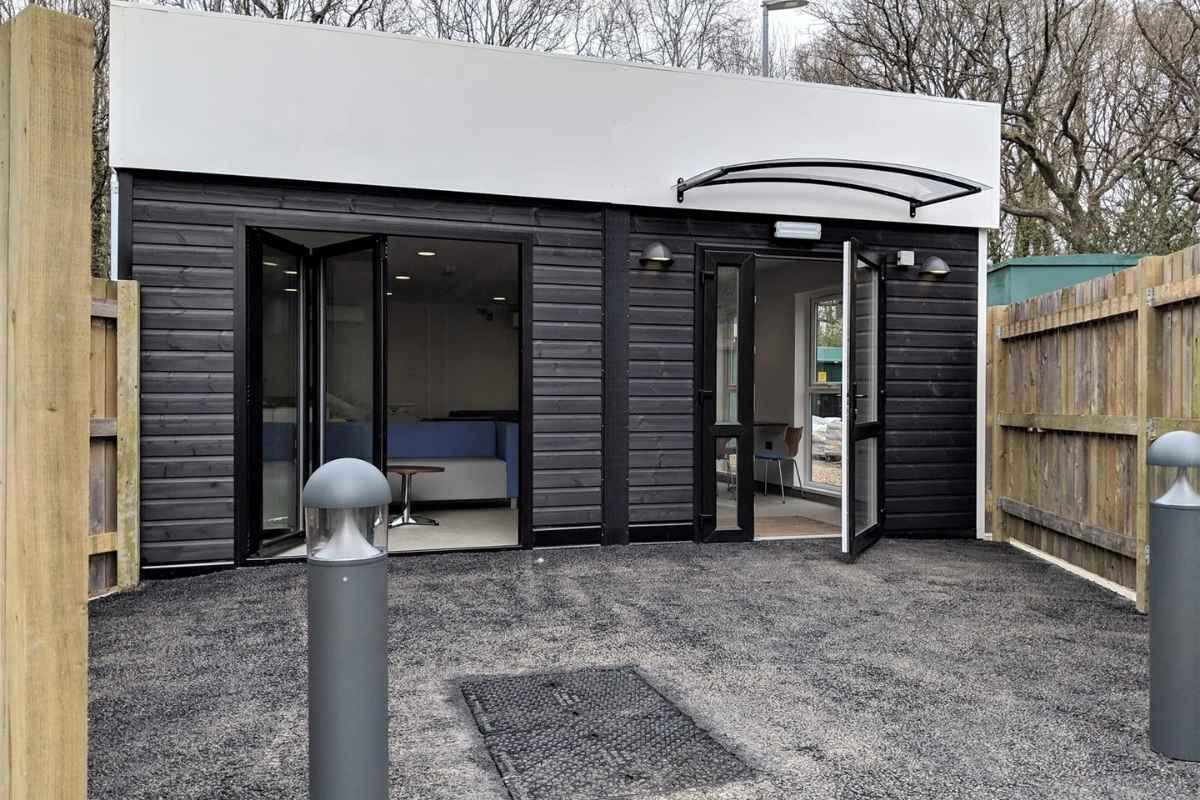
A Sustainable Choice for Businesses
Modular buildings offer an effective way for organisations to reduce their environmental impact. By cutting waste, lowering emissions, and improving energy efficiency.
These advantages do not require special locations or accommodations to be made; they are the direct result of an efficient building process.
At Flex Modular Buildings, we provide high-quality modular building solutions created to support your business while helping you reach sustainability targets.
Ready to find a modular building? Browse our range of buildings to find the right solution for your business.
You may also like
View all%20Install.jpg)
%20Plastic%20Coated%20Steel%20-%20Sargasso.jpg)
%20EC%20(1).jpg)




Have a question?
Or call 01405 516229 for an instant estimate