.png)
How are Portable Cabins Delivered: Getting Your Site Ready
When businesses need extra space quickly, whether for offices, classrooms, or healthcare facilities, portable cabins offer a faster and more efficient alternative to traditional construction.
McKinsey & Company reports that volumetric modular construction can reduce project timelines by up to 50% as it cuts down the amount of work needed on-site, avoiding many of the delays associated with traditional building methods.
However, while portable cabins are designed for rapid delivery and installation, preparing your land properly beforehand is a key part of ensuring the process runs smoothly.
From site access and foundations to drainage and utility connections, the right preparation can help avoid delays and make installation day far more straightforward.
We’ll explain more about how portable cabins are delivered, what needs to be done before installation day, and how working with an experienced modular building provider like Flex Modular Buildings can get your new space operational as quickly as possible.
How Are Portable Cabins Delivered?
Portable cabins are typically delivered through a process that includes site surveys and access checks, transporting the portable cabin, positioning and installation, and connecting utilities before final safety checks are completed.
As much of the construction work is completed off-site, delivery is designed to be efficient, straightforward, and minimally disruptive.
Site Survey and Access Checks
For modular building projects, a site survey is typically carried out before a delivery takes place to assess whether the location is suitable for installation.
This involves checking access routes for delivery vehicles, identifying any potential obstacles such as overhead cables or tight entrances, and assessing ground conditions to ensure the area can safely support both the cabin and crane positioning.
Planning ahead at this stage helps avoid delays on installation day and ensures the delivery process runs smoothly.
Transporting the Portable Cabin
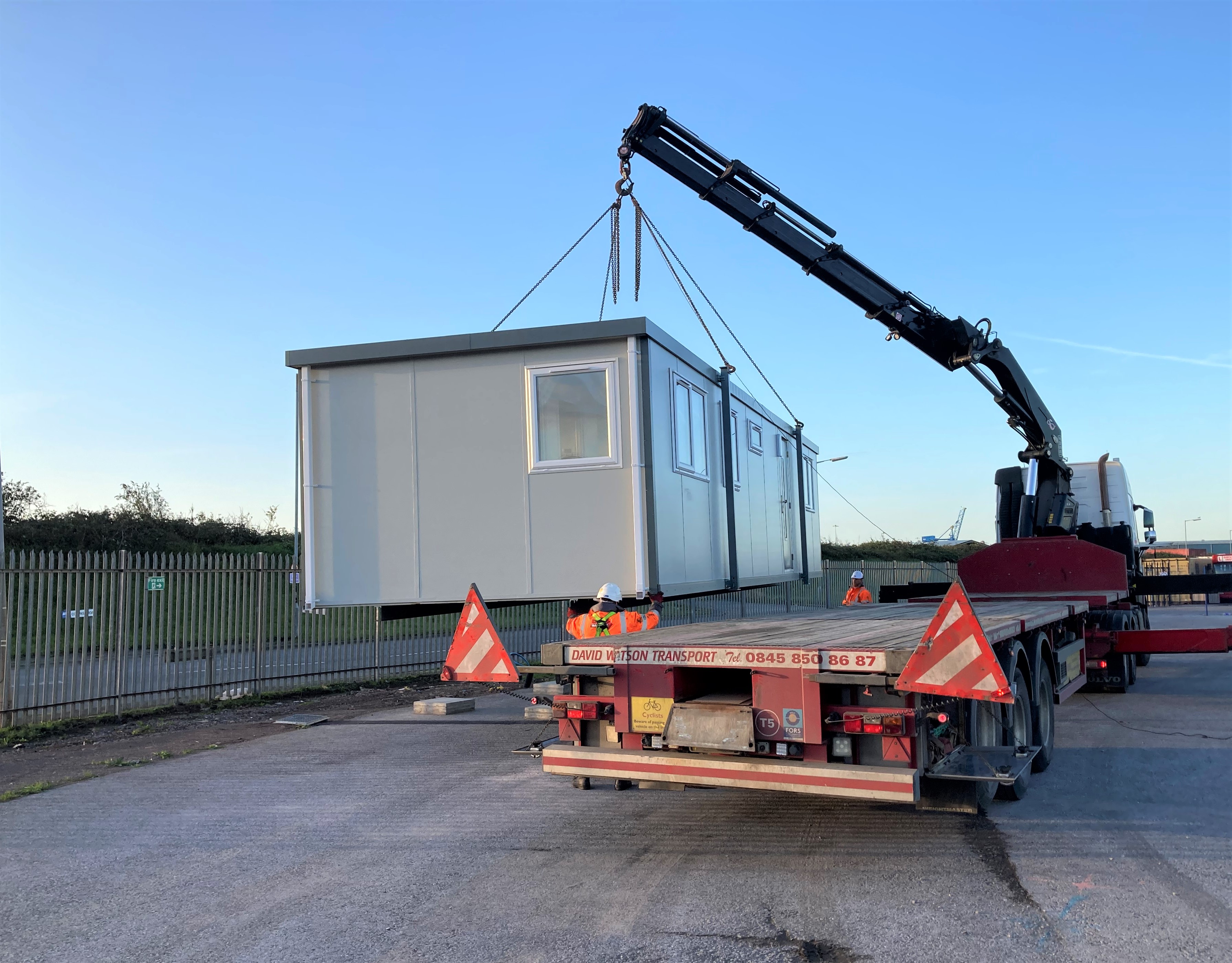
Portable cabins are commonly transported using specialist HIAB lorries equipped with built-in cranes. The building is securely loaded at the factory and transported directly to site, ready for positioning.
For larger modular buildings, delivery may involve multiple sections being transported separately before being connected together on-site. This approach allows larger facilities to be installed efficiently, even in locations with restricted access.
Positioning and Installation
Once the delivery vehicle arrives, the cabin is carefully lifted into position using either the HIAB crane attached to the lorry or a separate mobile crane for larger units.
Accurate positioning is essential to ensure the building sits level and is ready for final connections.
Connecting Utilities and Final Checks
After installation, any required utilities such as power, water or drainage are connected and final safety checks are completed.
In many cases, portable cabins can be ready for use within a very short timeframe after arriving on-site.
What Site Preparation Is Needed Before Delivery?
While modular installation is significantly faster than traditional construction, the site itself still needs to be suitable for the delivery vehicle and the building installation process.
Preparing a Suitable Base
Portable cabins need a stable and level surface to ensure the building remains safe, secure and properly supported over time.
Before delivery takes place, the site may need to be cleared and levelled so it can safely support both the building itself and any installation equipment. Depending on the size and type of cabin, this could involve concrete pads, paving slabs, steel supports or temporary foundation systems.
Ground conditions should also be assessed early in the planning process, as unstable or unsuitable terrain can affect both the installation and long-term performance of the building.
.jpg)
Ensuring Clear Access for Delivery Vehicles
Portable cabins are transported using specialist delivery vehicles and lifting equipment, which means the route to site and the installation area both need to be carefully planned before delivery takes place.
Access routes should be checked in advance to ensure large vehicles can safely reach the site without issues such as narrow roads, restricted turning areas, overhead cables, low tree branches or bridge height limitations. Even relatively minor access restrictions can affect delivery logistics if they are not identified early.
Space around the installation area is also important, particularly where cranes may require additional clearance during unloading.
In some cases, temporary obstacles such as parked vehicles, perimeter barriers or low-hanging branches may need to be cleared to allow the building to be safely lifted and positioned on-site.
Planning Utility Connections
Unlike traditional construction projects, where utility installation is often completed gradually alongside the build itself, many portable cabins and modular buildings are manufactured off-site with key internal services already prepared before arriving on-site, such as electricity, water, drainage, or internet connectivity.
Planning these connections before delivery can help speed up installation and minimise the amount of additional work required once the cabin is in position.
For some sites, utility connections may need to be coordinated before installation day so the building is ready for use once installation has been completed. Where utilities are not immediately available, planning temporary service arrangements in advance can help keep installation straightforward.
This is particularly important for portable cabins being used as offices, classrooms or welfare facilities, where access to power, water and internet connectivity may be needed immediately following installation.
Allowing Space for Future Expansion
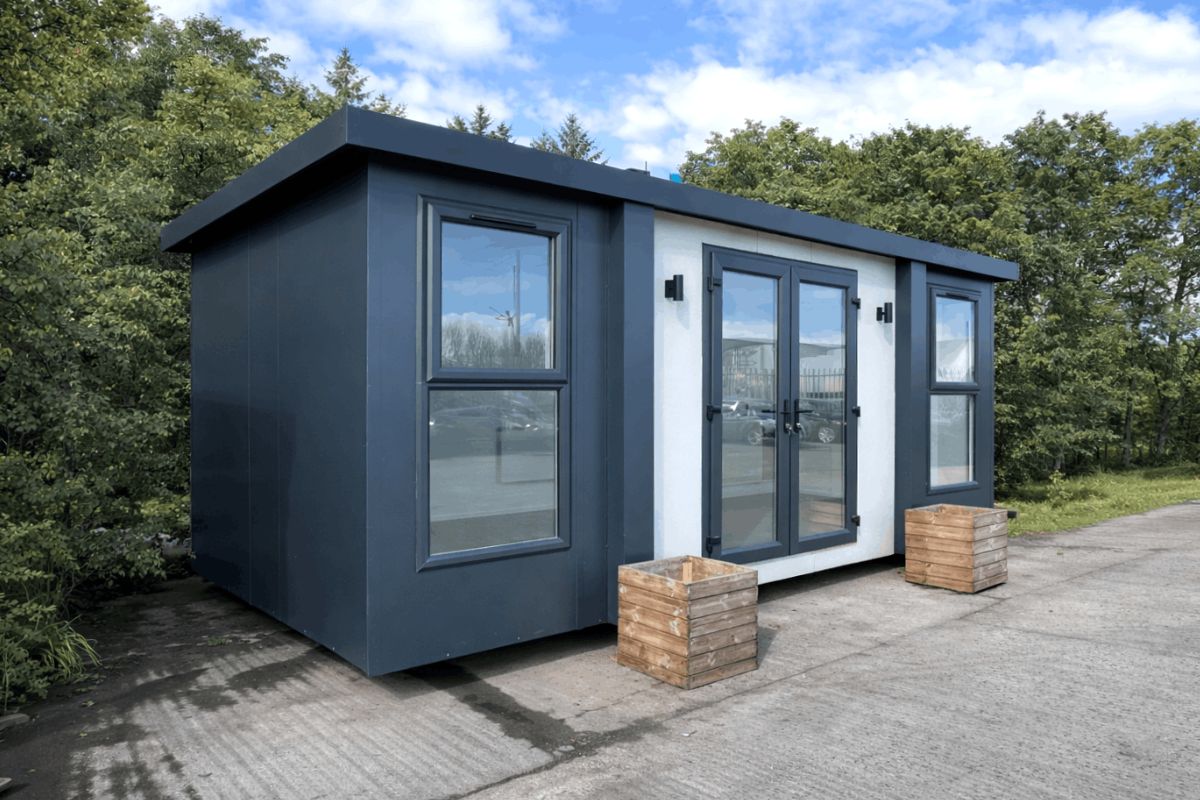
Portable cabins and modular buildings are often chosen because they can adapt more easily to changing site requirements over time. When preparing land for delivery, it can therefore be useful to consider whether additional cabins, welfare facilities, storage areas or access routes may be needed in the future.
Leaving enough surrounding space where possible can help make future site adjustments and any additional cabin installations easier if operational requirements change later on.
This is particularly relevant for schools, where Department for Education projections continue to show changing pupil numbers and ongoing demand for flexible space planning, as well as construction sites and healthcare environments where operational requirements may develop over time.
How We Can Help
Portable cabins are usually delivered using crane-equipped vehicles that transport the building directly to the site.
The land is prepared with suitable access points, stable ground conditions and enough space for crane positioning before delivery takes place. Once on-site, the cabin is lifted into position, connected to utilities where required and made ready for use.
Taking the right steps to prepare your site properly beforehand can make the whole installation process far more straightforward.
At Flex Modular Buildings, our team works closely with businesses, schools, healthcare providers and construction sites to help coordinate every stage of the process, from initial planning through to final positioning and utility connections.
Contact us today on 01405516229 to discuss your project and get a free estimate for your modular building requirements.
You may also like
View all%20EC%20(6).jpg)
%20External%20(1).jpg)
%20Goosewing%20Grey%20%26%20Anthracite%20(3).png)




Have a question?
Or call 📞 01405 516229 for an instant estimate